
Academy
Assessment
Improving Programmatic Assessment
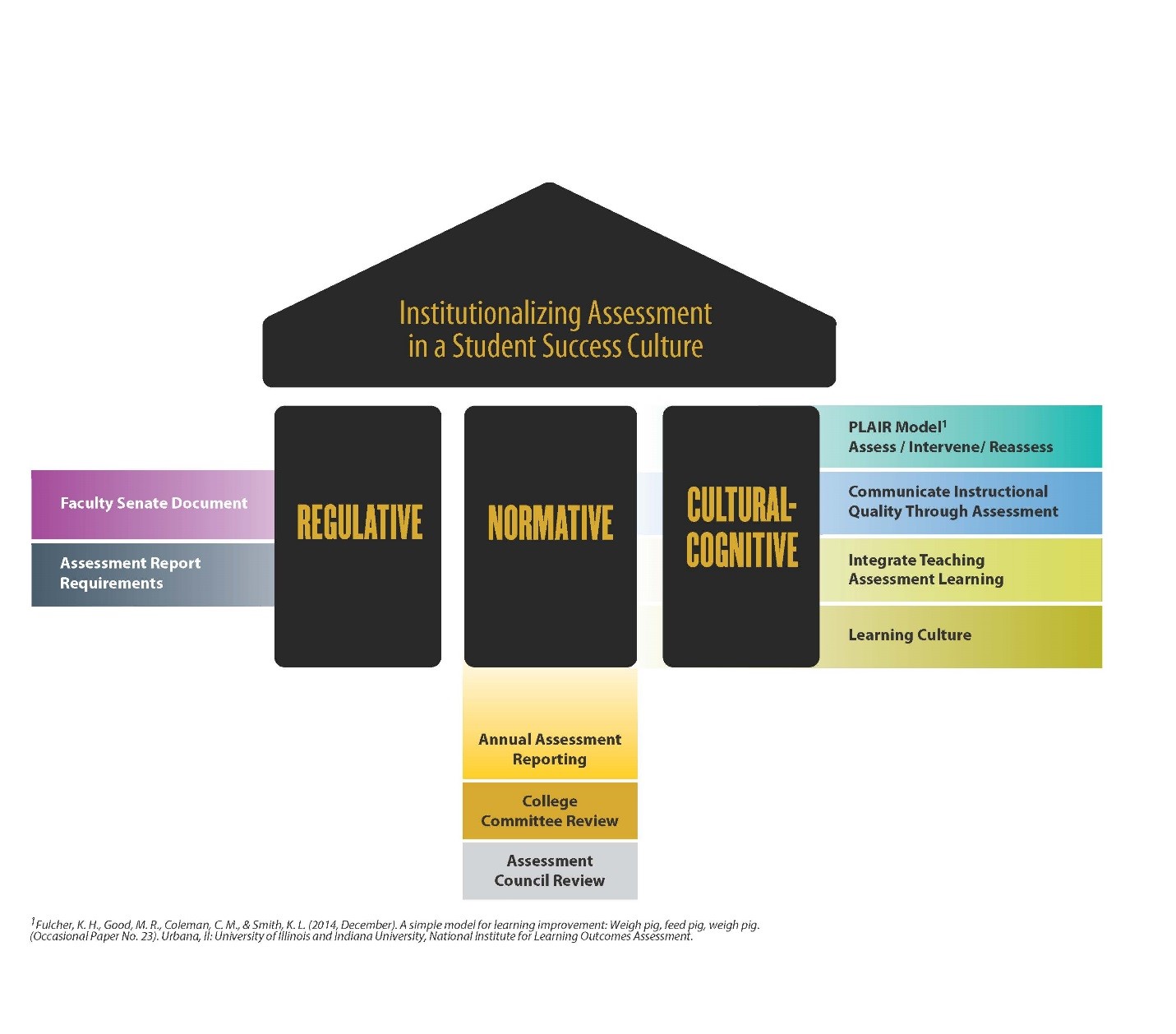
PFW's Assessment Academy cohort model connects departments, the assessment office, and the Higher Learning Commission Academy to build strong collaborations, boosting the ability to understand and improve student learning and success through better assessment practices that focus on growth and real-world results for students.

The Assessment Academy
The expected outcomes of the PFW Assessment Academy are:
- Create student learning outcomes that are assessable and define expectations for program graduates.
- Develop curricular maps that specify the expected level of achievement relative to programmatic student learning outcomes at common points in students’ matriculation to degree and to the Baccalaureate Framework.
- Produce an assessment plan defining how student achievement relative to programmatic outcomes will be measured.
- Implement the assessment plan by developing metrics that define expected levels of learning, designing and delivering student learning assessments, analyzing assessment results, and recommending changes to students' planned learning experiences to improve student success.
- Create an annual assessment report that aligns with Appendix D of SD 15-06.
For information about joining an academy cohort, contact Kent Johnson at 260-481-5411 or [email protected].
2025 College Assessment Committee Workshop
- Presentation—10/15/2025
2024 Reporting Review
- Presentation—7/11/2024
2021-22 Program Review
- Presentation—2/3/2022
2019-20 Program Review
- Presentation—9/9/2020
Public Policy Assessment
- Presentation—9/30/19
Dual Credit HLC Requirements
- Presentation—7/24/19
2018-19 DCS General Education Dual-Credit Assessment Workshop
- Presentation—2/18/19
- General Education Course Assessment Plan Template—2/18/19
- General Education Course Assessment Report Template—2/18/19
2017-18 General Education Assessment Revision Plan Proposal
- Town Hall on General Education Reading Package—2/2/18
- Presentation—2/7/18
- COAS Chair Presentation—2/15/18
2016-17 Working Session 1: Using Assessment Findings for Programmatic Improvement
In this session, we will discuss how to use assessment findings to make programmatic improvements. We will also discuss strategies for tracking and reporting results using the IPFW Assessment Tracking Form (https://www.pfw.edu/sites/default/files/documents-2026/01/Template-Template-Tracking-Assessment-Results-10-7-16_0.pdf). Finally, we will discuss communication strategies to describe to students and external audiences the knowledge and skills future IPFW graduates have developed that will contribute to both student success and the success of organizations and institutions they will serve.
Click here to register—February 7 or 21
- Using Assessment Findings for Programmatic Improvement Presentation
- Worksheets for Using Assessment Results
Reviewing Departmental Assessment Reports—College Level Assessment Committees Workshop
The focus of this workshop is to help prepare the College Assessment Committees in reviewing Academic Department Assessment Reports using Appendix D of SD 15-6.
Click here to register—October 5,10, or 11
- College-level Review of Programmatic Assessment Presentation
Creating Signature Assignments for Programmatic Assessment
This is a “hands-on” workshop designed to support IPFW Faculty in creating signature assignments for core courses that examine the extent to which students are achieving expected levels of learning relative to stated programmatic Student Learning Outcomes. The series is applicable to both assessing student learning in the major and in general education. It is a three-session series. At the end of the series, a faculty member or academic department will leave with a peer-reviewed signature assignment for their course, program, or general education. Each session is 45 minutes, and the sessions are described below:
- Part 1: Overview of Signature Assignments and Aligning Assignments to Programmatic Student Learning Outcomes.
Click here, then select a date to register - October 4 or 7
- Part 2: Designing Signature Assignments
Click here, then select a date to register - October 18 or 21
- Part 3: Peer Review of Assignments using the NILOA Charrette Process
Click here, then select a date to register - October 25 or 28
- Part 1: Overview of Signature Assignments Presentation
- Part 2: Designing Signature Assignments Presentation
- Part 3: Peer Review of Assignments Presentation
Assessment Tune-up
This is a facilitated review workshop in which groups of faculty have an opportunity to discuss how their current assessment plan might be improved to increase its capacity to improve student learning. Members of the Assessment Academy Team will facilitate the groups. At the end of the session, participants will leave with a peer-reviewed assessment plan for their academic program.
Click here to register—September 6 or 9
- Assessment Tune-up Presentation
- Assessment Tune-up Worksheet
Using Assessment Results
This is a guided discussion focused on using assessment findings to plan programmatic and/or course-level curricular changes to improve student learning. The session will guide groups of faculty in designing a curricular intervention or innovation, developing a strategy to assess it, and discussing how we might share our knowledge across campus to build a faculty learning community focused on improving student learning.
Click here to register—September 20 or 21
- Assess - Intervene Innovate - Reassess Presentation
- Assess - Intervene/Innovate - Reassess Worksheet
- Department Assessment Report Outline
Assessment Overview
The focus of this workshop is to present an overview of process, reporting structure, and support for programmatic assessment under Senate Document 15-6: Restatement of 98-22 Assessment of Student Academic Achievement.
Click here to register—September 27
- Assessment Overview Presentation
2015–16
Developing Student Learning Outcomes
- Workshop 1 Presentation
- Worksheet 1 Common Expectations for Program Graduates
- Worksheet 2 Drafting Programmatic SLO's
- Action Verbs from Bloom's Taxonomy
Mapping Student Learning Outcomes
- Workshop 2 Presentation
- Traditional Curriculum Map Worksheet
- Alternative Curriculum Map Worksheet
Developing Programmatic Assessment Strategies
- Workshop 3 Presentation
Other Workshops
- Implementing Assessment Plans
- NACEP Presentation