
peer review
center for the enhancement of learning and teaching
Peer Review
There are two types of peer review that instructors can use to inform their teaching. Both types inform faculty development, but they have important differences in their purposes and outcomes.
Formative Peer Review is used by instructors to enhance teaching and learning as part of their reflective practice. These reviews are voluntary and focus on the instructor’s unique teaching goals, needs, and interests.
Summative Peer Review is conducted to evaluate an instructor’s teaching performance, such as for annual review, promotion and tenure, or teaching award nominations. These reviews focus on specific, predefined measures of teaching effectiveness.
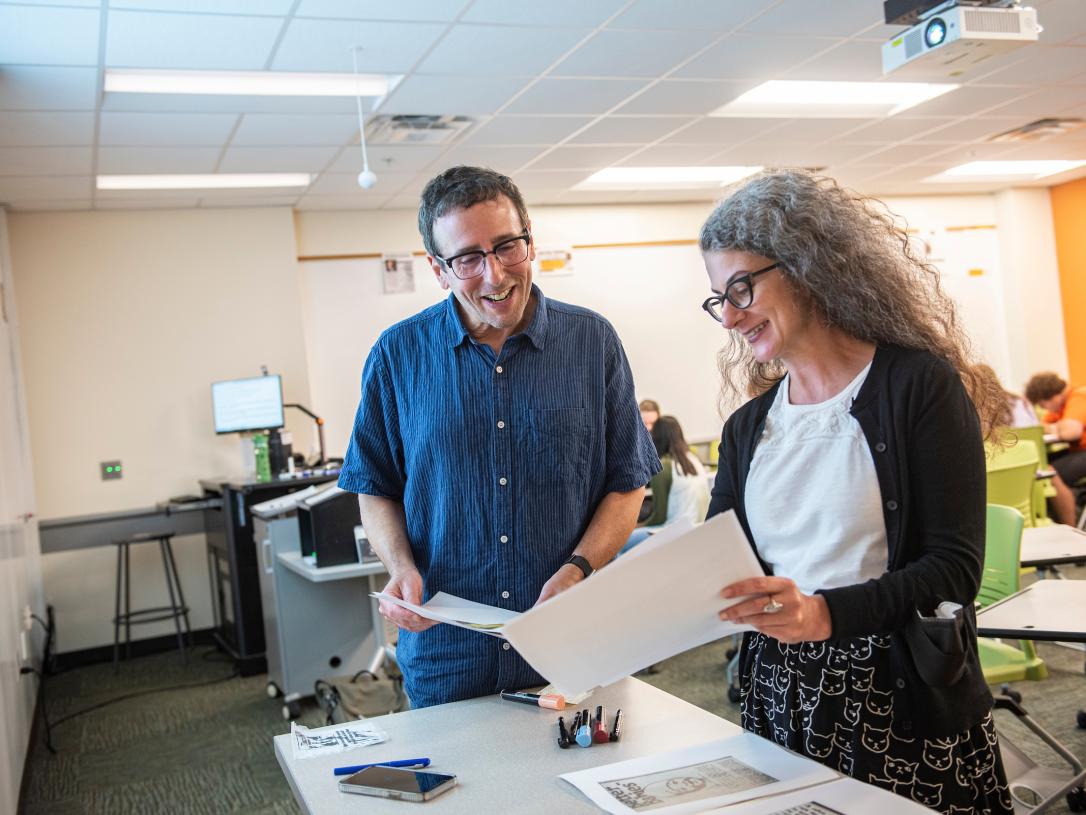
Choosing the Right Peer Review
An important first step in requesting peer review is deciding which type of review you want to pursue. Talk with a supervisor and/or mentor for help deciding the review type you need (formative, summative, or both). Your supervisor may have recommendations for potential reviewers or use the resources linked below.
Regardless of which type you choose, peer review can provide inspiring insights about teaching for both the reviewer and reviewee. Consider including both as part of your systematic process of reflective teaching.
| Formative Peer Review | summative peer review | |
|---|---|---|
| Goal | Enhancement of teaching/learning | Evaluation of teaching performance |
| Focus | Faculty-driven | External criteria |
| Privacy | Confidential | Semi-public |
| Feedback | Constructive, collegial | Evaluative, formal |
Formative Peer Review Services
Our CELT Formative Peer Review Fellows are experienced Purdue Fort Wayne faculty members who offer confidential, personalized teaching consultations to help you achieve your teaching goals. Whether you want to enhance your classroom instruction, improve your online courses, or master a blend of both, our FPR Fellows are here to support you. They provide formative feedback through classroom observations, materials reviews, online course evaluations, and more. These dedicated faculty members are expertly trained to offer friendly, constructive guidance tailored to your needs. Experience the benefits of a collegial, formative peer consultation and discover new ways to inspire your students.
Formative peer review focuses on the enhancement of teaching and learning. These confidential consultation services are driven by your teaching goals and tailored to meet your individual needs and interests.
Our fellows offer the following formative peer review services:
- Classroom observation
- Online course review
- Review of instructional materials and activities
- Syllabus review
- Small Group Instructional Diagnostic (SGID)
- Analysis of student feedback and evaluation data
To request a consultation, please complete the Teaching Consultation Request Form.
All Formative Peer Review Fellows engage in a three-step peer review process. This process will include:
- Pre-Review Meeting
During this meeting, your Fellow will take time to get to know you, understand your teaching goals, and explore what you hope to gain from the review. - Review
Next, the fellow will complete their review by either visiting your class (in-person or virtual), reviewing materials, and/or exploring your course from a learner perspective. - Post-Review Meeting
During this meeting, you and your fellow will discuss their observations, interpretations of their observations, and feedback. Using this information, you will create 1-3 actions items that you can implement the next time your course is offered.
At the end of the process, you will receive a formative feedback form that you can include in your teaching dossier.
CELT FPR Fellows play a crucial role in supporting PFW faculty through collegial formative peer reviews. Recognized for their excellence in teaching and respected as colleagues, Formative Peer Review Fellows leverage their experience, relational trust, situational awareness, and discretion during consultations.
The FPR Fellow role is distinguished by its rarity in finding individuals who embody these qualities. It's an honor earned through an application process designed to understand your motivation in becoming a teaching fellow, your beliefs about teaching and learning, and evidence of your effectiveness as an instructor. This is an opportunity to contribute meaningfully to the university by providing valuable mentorship to colleagues. Applicants must have at least three years of teaching experience before applying.
For more information about requesting FPR Fellow services or becoming a Formative Peer Review Fellow, please contact Kevin Stoller at [email protected] or Rebecca Essig at [email protected].
-
Kristin Barker
Clinical Assistant Professor of Human Services
Laurel Campbell
Associate Professor and Director of Art Education
Jeong-il Cho
Professor of Education
Steven Cody
Associate Professor of Art History
Karol Dehr
Limited Term Lecturer - Philosophy
Rebecca Essig
Associate Professor of First-Year Engr
Kerrie Fineran
Chief of Campus and Community Wellbeing
Suin Roberts
Professor of German
Patricia Eber
Chair and Associate Professor
Brad Oliver
Clinical Professor of Educational Leadership
Jeffrey Nowak
Professor of Education
Yvonne Zubovic
Associate Professor Mathematical Science
Marcia Dixson
Professor of Communication
Summative Peer Review Services
While CELT focuses on Formative Peer reviews the following organizations are trained to perform Summative Peer Reviews:
Faculty Academy on Excellence in Teaching (FACET): FACET is a dynamic, collaborative community of inducted faculty dedicated to and recognized for excellence in teaching and learning. FACET asserts that excellence in teaching and learning requires dedication to an inclusive community that promotes justice in higher education. This commitment infuses FACET’s advocacy for pedagogical innovation and student success, cultivation of the scholarship of teaching and learning, and advancement of professional and personal growth.
Summative Peer Review Network (website coming soon): Members of the Summative Peer Review Network have completed the cohort-style program designed to help faculty hone their skills in conducting summative peer reviews of teaching. The year-long program includes synchronous and asynchronous professional development activities that focus on key topics, including the peer review process, defining criteria for teaching evaluation, crafting effective feedback, and writing peer review letters.
Peer Review Support & Training
Our Peer Review Team offers training and support to help you develop skills to conduct effective reviews of teaching for colleagues and peers. Join our sessions to become an effective peer reviewer.
Peer Review Guides
- Overview of the Peer Review Process
- Initial Meeting Guide
- Classroom Observation Guide
- Classroom Observation Worksheet
- Writing the Peer Review Report Guide
Peer Review Training Workshop
In this two-hour synchronous workshop, the Peer Review Team will model an evidence-based process for peer review, explain best-practices, and provide opportunities for participants to apply what they’ve learned. It is best to participate in a live workshop, but you may also watch the workshop recording.
Online Peer Review Training Course
This asynchronous online Peer Review Training is delivered through Brightspace and consists of 4 self-paced modules. The course includes learning activities, video demonstrations, self-assessments, and opportunities to receive feedback from the Peer Review Team. To access this training, submit an enrollment request form.
Do you need a peer review, but need help determining where to begin? Review this Overview of the Peer Review Process to get started. Then, consider attending a training opportunity designed specifically for individuals who want to learn ways to maximize their peer review experiences.
So You Need a Peer Review . . . What Now?
This synchronous training is intended for individuals who are planning to undergo peer reviews of teaching. In this workshop, the Peer Review Team will clarify the different types of peer review, explain what to expect during the peer review process, and share strategies for making the most of your peer review experience. A recording of this session is available under the recorded workshop section.
So You Had a Peer Review . . . Now What?
This synchronous workshop is intended for individuals who've had a peer review and want to maximize their use of the reviewer feedback. The Peer Review Team will guide faculty on using feedback to enhance teaching practice, demonstrate professional development, and document teaching for review, promotion, or tenure.
-
Jeong-il Cho
Professor of Education
Karol Dehr
Limited Term Lecturer - Philosophy
Andrew Kopec
Professor of English
Rachel Ramsey
CELT Assistant Director of Faculty Teaching and Development
Gary Steffen
Dir School Polytechnic/Assoc Prof CEIT
Yvonne Zubovic
Associate Professor Mathematical Science
