Default Hero Image

educational technology

center for the enhancement of learning and teaching


Educational Technology


PFW instructors have access to many educational technologies that can be used to enhance teaching and learning in any modality. CELT can help you choose the right technology for your individual needs and goals and integrate the technology effectively into your teaching.


 

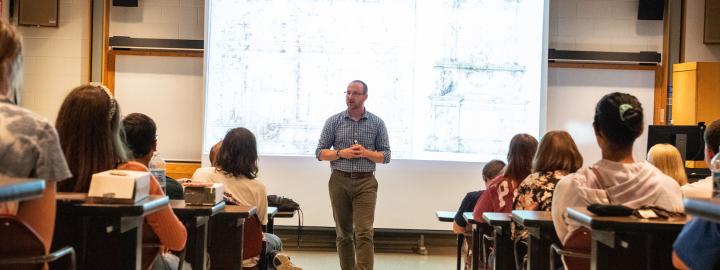
Professor lecturing.
Need help with
Academic Integrity
Learn more
20240124-COLA-Eng-Ling-Classroom-JW-079.jpg
Need help with
Brightspace
Learn more
Student working at a computer in the lab.
Need help with
Video and Content Creation
20221006-History-Class-Bauer-JW-004.jpg
Need help with
Video Conferencing and Interaction
Professor lecturing
Need help with
Other tech tools
CELT staff standing outside
Unsure of where to start
Book a Consultation
Learn More

Academic Integrity

Academic integrity is a common concern for online and hybrid courses. In addition to using plagiarism checking software and proctored exams or tests, instructors may also consider alternative strategies to effectively assess student learning while reducing the tendency or possibility of academic integrity violations. See the following strategies and tools to design effective assessments.

Alternative assessments such as project-based learning and problem-based learning require students to demonstrate their achievement of learning outcomes by applying the new knowledge and skills and solving complicated problems. Such projects usually last several weeks. Therefore, it is recommended that faculty provide scaffolded assignments and quality feedback to support student learning. Read more on alternatives to the traditional exam as measures of student learning outcomes.

When students are required to apply the course content to their real lives, it is almost impossible to cheat. In addition, students are more motivated and engaged in the learning process when they can do the following:

  • Draw on their personal experience
  • See the connection between the course and the real world problems or needs

Some examples include case studies, research projects, student-proposed projects, and service-learning projects.

Instructors can require students to present their final project by presenting to the class or just the instructor. The presentation can be synchronous via a web conference tool (e.g., WebEx) or asynchronous (e.g., Kaltura video). It is recommended that instructors use specific guiding questions or structures and grading rubric to communicate their expectations. The presentation or individual reflection videos also provide valuable opportunities for students to organize their ideas and elaborate on what they have learned.

Many alternative assessment methods last from several weeks to a whole semester. To make sure students are on track, instructors often use scaffolded assignments. Scaffolded assignments can break down the large assignments into smaller and more manageable steps that build on each other. Instructors can also provide high quality feedback at the early stage and provide opportunities for students to make improvements. This strategy allows the instructor to:

  • identify struggling students to provide the necessary support,
  • identify the most challenging knowledge and skills, and
  • focus on the learning process, instead of the final product.

For each assignment or exam, stating clearly how much collaboration is permissible will help students understand the instructor’s expectations. Some departments or course instructors also arrange online help sessions or group study sessions to help students better prepare for assignments and exams. This is especially important for group projects. Instructors need to clearly communicate which part can be group work and which parts need to be individual work.

Contact us

Have questions?


Contact us at [email protected] or 260-481-6354.
You can also find us on campus in Kettler Hall, Room 238.