
Student research
research and sponsored programs
Registration
Purdue Fort Wayne undergraduate students are invited to participate in the Purdue University Spring Undergraduate Research Conference.
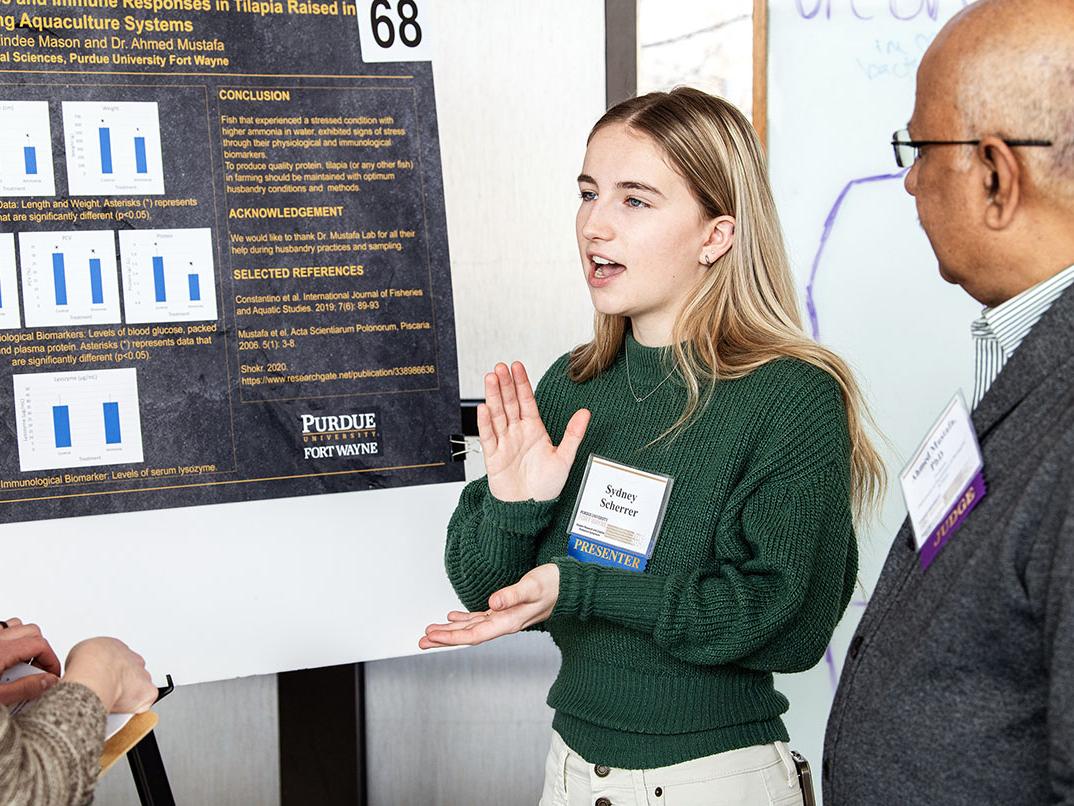

28th Annual Student Research and Creative Endeavors Symposium Dean's Choice Winners
Poster 28: Effects of Nordihydroguaiaretic acid and Shikonin on antibiotic tolerance, biofilm formation and cell surface properties of Mycobacterium abscessus
Carina Wiljer, Senior, Biology
Faculty Mentor: Dr. Jaiyanth Daniel
Department: Biology
Poster 72: Transforming Physical Lab Kits into a Virtual Platform: A Cyber-Physical Solution for First-Year Engineering
Samiya Qasmi, Senior, Computer Engineering
Faculty Mentor: Dr. Claudio Freitas
Department: Engineering
Poster 85: Life is a Cabaret: Dramaturgy as a Backbone
Nikolas Prathaftakis, Junior, Theatre
Faculty Mentor: Austin Rausch
Department: Theatre
Poster 88: Walmart Product Reviews: Insights and Implications from the FTC's Ruling
Zaid MH Masri, Graduate, Business Administration
Faculty Mentor: Vaidya Saunak
Department: Management and Marketing
Poster 87: One Size Fits None: Analyzing the Issues of Binary Fashion for Non-Normative Bodies and Minds
Eden Bailey, Senior, Anthropology and Women's, Gender, and Sexuality Studies
Faculty Mentor: Stevie Scheurich
Department: Political Science
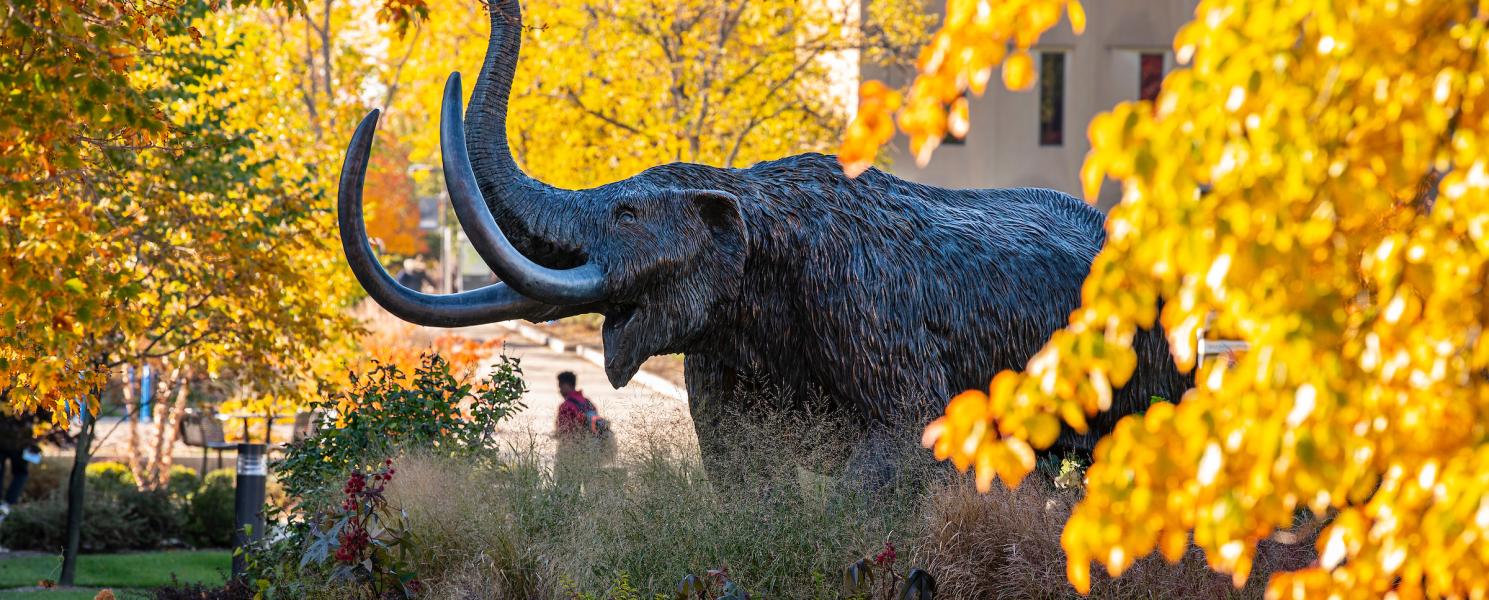
Documenting the university's history
mDon
mDON (mastodon Digital Object Network) is an array of images, publications, video, and data assembled from the archival collections of Purdue University Fort Wayne and community partners such as Allen County-Fort Wayne Historical Society. These collections document the history and development of the university and its predecessors, including Indiana University–Purdue University Fort Wayne (IPFW), as well as the city of Fort Wayne and Northeast Indiana.
FAQ
Purdue University Fort Wayne (PFW) and Indiana University Fort Wayne (IUFW) undergraduate and graduate students are invited to present their findings in the field of research/scholarship/creative endeavors under the guidance of a PFW or IUFW faculty mentor in the form of a poster presentation to the Purdue Fort Wayne and Indiana University Fort Wayne community.
Research includes the systematic investigation in which researchers exchange knowledge and foster intellectual and scientific growth. This form of empirical research is conducted across multiple disciplines, including, but not limited to, the sciences, engineering, mathematics, technology, computer science, social sciences, and humanities. Depending on the timing of their research studies, students will present their final or preliminary findings at the symposium.
Scholarship is similar to empirical research, with an innovative method of discovery and learning for researchers. However, scholars will demonstrate a high level of disciplinary expertise and engagement by impacting stakeholders in their communities, regions, and beyond. Scholarship may take the form of literary analyses or other methodologies, in which scholars present their research to a broader audience. Depending on the timing of their study, students will present their final or preliminary findings at the symposium.
Creative endeavors celebrate artistic forms of creative expression. This type of presentation offers students an opportunity to showcase their creative projects, performances, or presentations to a broader audience. Creative endeavors include, but are not limited to, fine arts, graphic design, creative writing, film and media studies, photography, artwork, performing arts, and music studies. Their expertise may include art galleries, live performances, readings, film screenings, interactive installations, and more. The symposium allows artists and creators to showcase their talents, receive feedback, foster collaboration, and inspire others through their artistic creations. Depending on the timing of their study, students will present their final or preliminary findings at the symposium.
1. Why should I participate in the symposium?
The symposium is a great opportunity for both undergraduate and graduate students to showcase their work. Not only does it expand their oral and presentation skills, but it also allows them to collaborate with a faculty member with many years of expertise, providing a valuable academic experience that enhances the critical thinking skills needed when applying to a higher-level academic program or preparing for the workforce.
2. Who is eligible to present at the symposium?
PFW and IUFW undergraduate and graduate students.
3. Am I required to have a faculty mentor to participate in the symposium?
Yes, students must have a faculty mentor throughout the research process, and the mentor must approve the student’s final conference abstract.
4. Where does the symposium take place?
The symposium is held on the second-floor skybridge between Helmke Library and Walb Student Union.
5. Is the symposium open to artists?
Yes. We welcome all visual and performing artists to showcase their work—whether it’s sculpture, painting, music, theatre, photography, or other creative forms.
Department of Art and Design example of Creative Endeavor video featuring Seth Green
6. Can I present ongoing (preliminary) research?
Yes, as long as the student’s faculty mentor approves their study. Presenting ongoing (preliminary) findings at the Symposium is an excellent platform for receiving feedback on improvements, suggestions, and ideas.
7. I was accepted to present my research at a state/regional/national/international conference. Can I present this same poster presentation at the university’s symposium?
Yes. In fact, many disciplines use the symposium to “practice” before their professional presentations. Presenters can even request that their poster match conference requirements.
8. I’m involved in more than one research study. Can I submit applications for more than one research project?
Yes, as long as the student is working with a faculty mentor at PFW or IUFW.
9. Can I present if I graduated this past year?
Of course, as long as the student is working with a faculty mentor at PFW or IUFW who can approve their final abstract for the conference proceedings. We understand that some students might not complete their research until the end of their senior year, after the March symposium. Every year, we have graduates who return to present their research findings at the next year’s symposium.
10. Accessibility
Purdue Fort Wayne is committed to equal access and providing an environment in which individuals with disabilities can fully access programs, services, activities, and facilities at PFW. Please don’t hesitate to contact us for specific accommodations at [email protected].
1. How do I register for the symposium?
Visit our website to register.
2. How long should my abstract be?
Abstracts should be no more than 500 words. Students should follow their discipline’s guidelines for the abstract format.
3. Can someone show me how to write an abstract or concept statement?
Yes, the Writing Center is available to assist students with their abstract.
4. Who reviews the abstracts?
All abstracts are reviewed by the Symposium Abstract Committee to provide recommendations and feedback to students before publication in the proceedings.
5. How do I print my poster?
We will print posters for the students. Research and Sponsored Programs in the Office of Academic Affairs pays for your poster. Before the deadline, students will email their final poster PDF file to [email protected]. See the student checklist for the deadline on our website, under resources.
6. What is the poster size? And, can I request a different poster size?
Poster recommendations:
- Size: 40 inches x 24 inches
- Border: ½ inch around the poster
- Layout: horizontal or vertical
- Abstract on the poster is optional
- Students who are presenting at both their professional conference and the symposium may use the same poster, according to their professional association’s poster guidelines, and can request a different size. Please email [email protected] to request a different poster size.
7. What templates can we use to create/design the poster?
We have partnered with Studio M to assist students in creating/designing their posters. Students can choose one of the following poster templates:
- Illustrator
- InDesign
- PowerPoint
8. What time will I present?
We understand that some students might have class on the day of the symposium. All student presentations will take place on the skybridge between Helmke Library and Walb Student Union. Based on the student’s availability, they will be assigned a time and a poster number prior to the event.
9. How long is my presentation time?
Students have 5–7 minutes to discuss their findings.
10. My research requires me to set up a visual aid, artwork, equipment, a laptop, and/or instruments for my presentation. Can I request a table?
Yes, students just need to email [email protected], and we will place a small table at the student’s assigned location by their poster easel. The morning of the symposium, the students will check in at the student registration table and then attach their poster to the easel’s foam board with binder clips.
1. What should I wear to the symposium?
We recommend business casual attire.
2. Who can I invite to the symposium?
Student presenters can extend a personal invitation to their friends, family, roommates, classmates, mentors, etc. This event is open to the public.
3. Can I still go if I am not presenting?
Yes. The annual symposium is a great opportunity for students to learn, support one another, and discuss their research with peers. Students will be able to see which research topics undergraduates and graduates are conducting across a variety of disciplines, and they can learn about the process as they plan for future symposiums.
1. How do I become a faculty mentor?
We recognize that some undergraduate and graduate students may already be working with a faculty member as part of their research team. In other cases, students may invite a faculty member to serve as their symposium mentor for a project they completed in the faculty member’s course, whether as an undergraduate or a graduate student.
2. Can a faculty mentor review the posters and presentations at the symposium?
Yes. The faculty mentors are well-versed in the student’s project and can ask impactful questions during the presentation. This is common in multiple disciplines across campus.
3. I received an email from your office asking to approve a student’s abstract. What does this mean?
Faculty mentors will be asked to approve their student’s final abstract. The email from our office includes a link to review their student’s abstract for approval (or to deny it and provide the reason). If the faculty mentor requires the student to revise their abstract, this will not harm the student’s chances of participating in the symposium. We highly recommend that faculty mentors provide an internal deadline for their students. This allows the faculty mentor time to review the abstract before the student submits their final abstract to our office for the final faculty mentor approval.
Advisory Board

Jamie Rausch
IUFW- Affiliate Clinical Assistant Professor

Farah Combs
Director of Honors and Experiential Learning

Lisa McLellan
Assistant Professor of Biological Sciences - Genomics
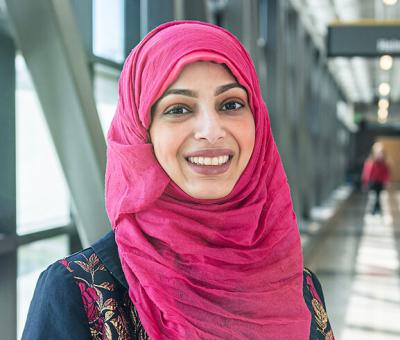
Hanan Alyami
Assistant Professor of Mathematics Education
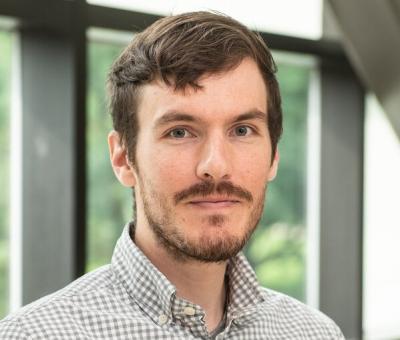
Jeffrey Cline
Assistant Professor of Economics

Austin Rausch
Assistant Professor of Theatre - Costume Design

Claudio Freitas
Assistant Professor of First-Year Engineering
Planning Committee

Caleb Britton
Information Services and Instruction Librarian/Assistant Librari
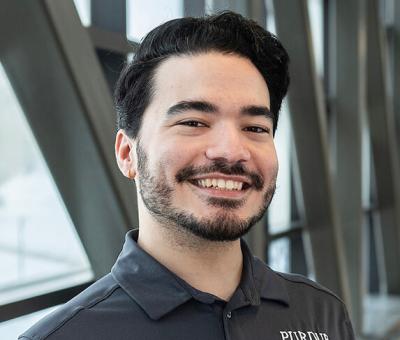
Michael Sartiano
Graphic Designer for Academic Affairs