From volunteer to researcher: PFW graduate student helps restore rare Franklin’s ground squirrels
By Todd Eviston
August 12, 2026
For Purdue University Fort Wayne graduate student CJ Klopfenstein, the summer represents an opportunity to help restore one of Indiana's rarest mammals to its native habitat.
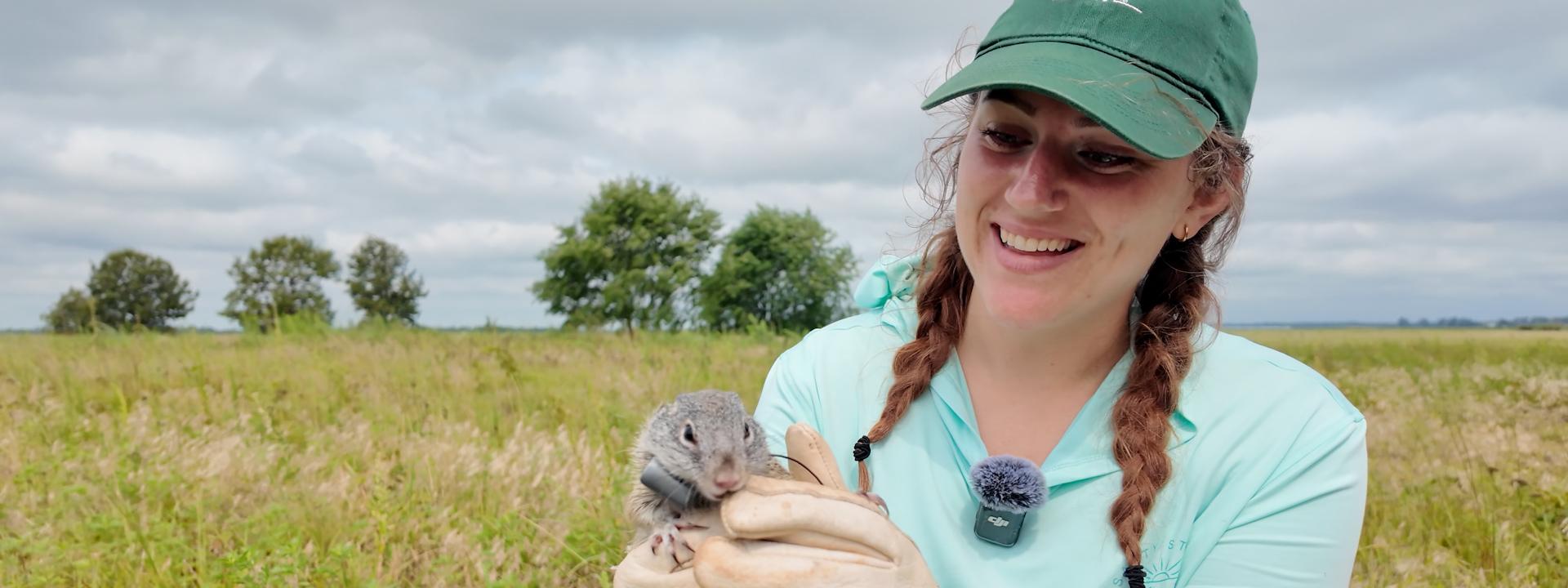
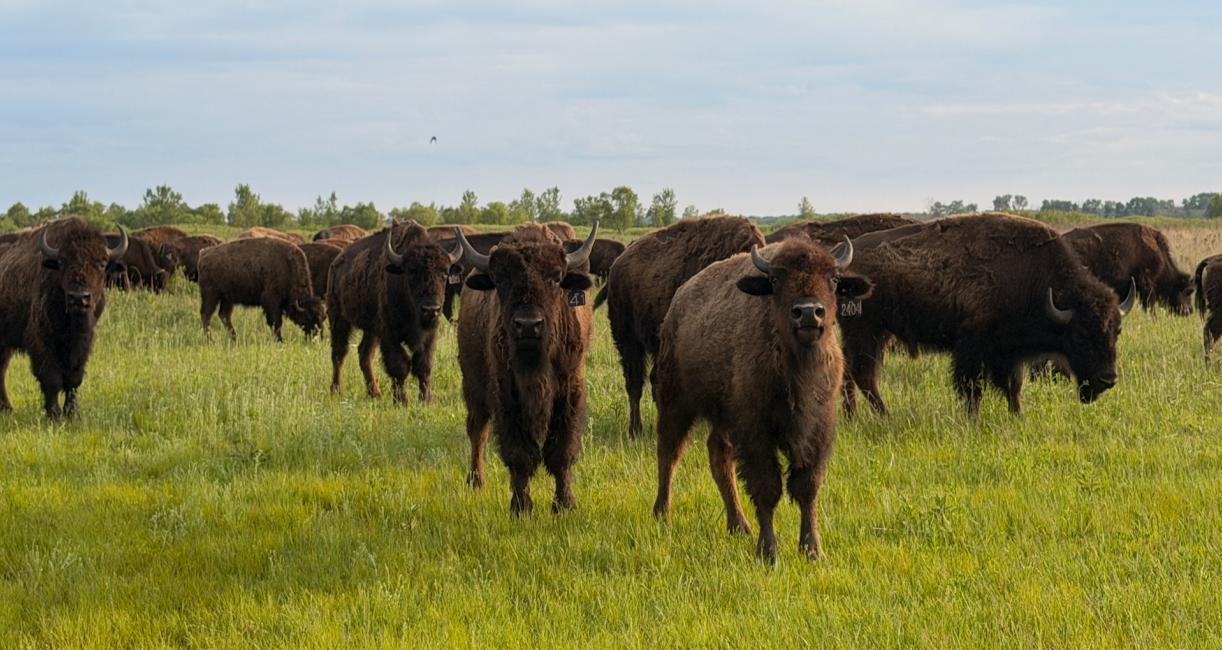
Klopfenstein, a master's student in biology, is leading research focused on the reintroduction of Franklin's ground squirrels to Kankakee Sands Nature Preserve in Morocco, Indiana, about a three-hour drive west of Fort Wayne. The project combines wildlife conservation, population monitoring, and genetic analysis to better understand how the species adapts and survives after being released into the nature preserve, which features native prairie habitat and a herd of bison.
The Franklin's ground squirrel was once more common throughout the Midwest but has experienced significant population declines because of habitat loss and fragmentation. The reintroduction effort at Kankakee Sands aims to establish a stable, self-sustaining population in Indiana.
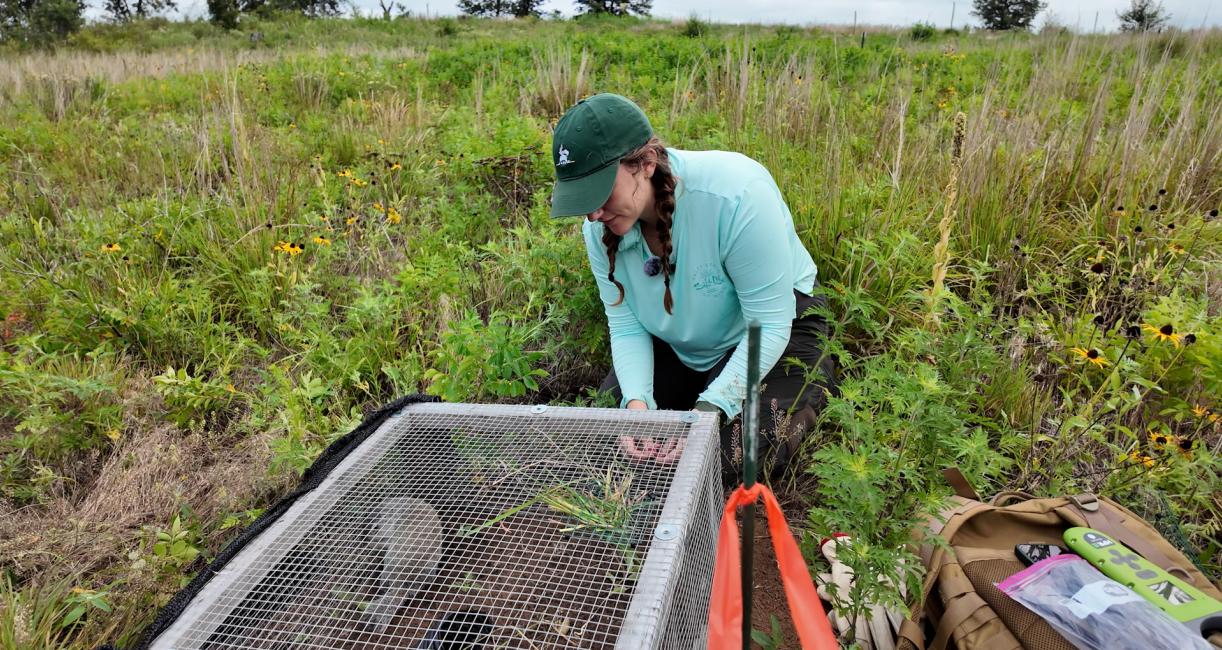
Before being released into the preserve, the squirrels spend about a week in specially designed "soft release" enclosures. The structures allow the animals to gradually acclimate to their new environment while remaining protected. Above-ground mesh sections expose the squirrels to local vegetation and weather conditions, while underground chambers mimic natural burrows and provide shelter from the summer heat.
After the acclimation period, the squirrels are released into the prairie and monitored using radio telemetry collars. Fifteen squirrels in this year's release group have been fitted with collars, allowing Klopfenstein to track their movements and determine where they settle, how far they travel, and what habitats they prefer.
The data helps researchers understand whether the squirrels are successfully establishing territories or dispersing beyond suitable habitat. By recording GPS locations and movement patterns, Klopfenstein can compare home ranges and behavior across multiple years of the project.
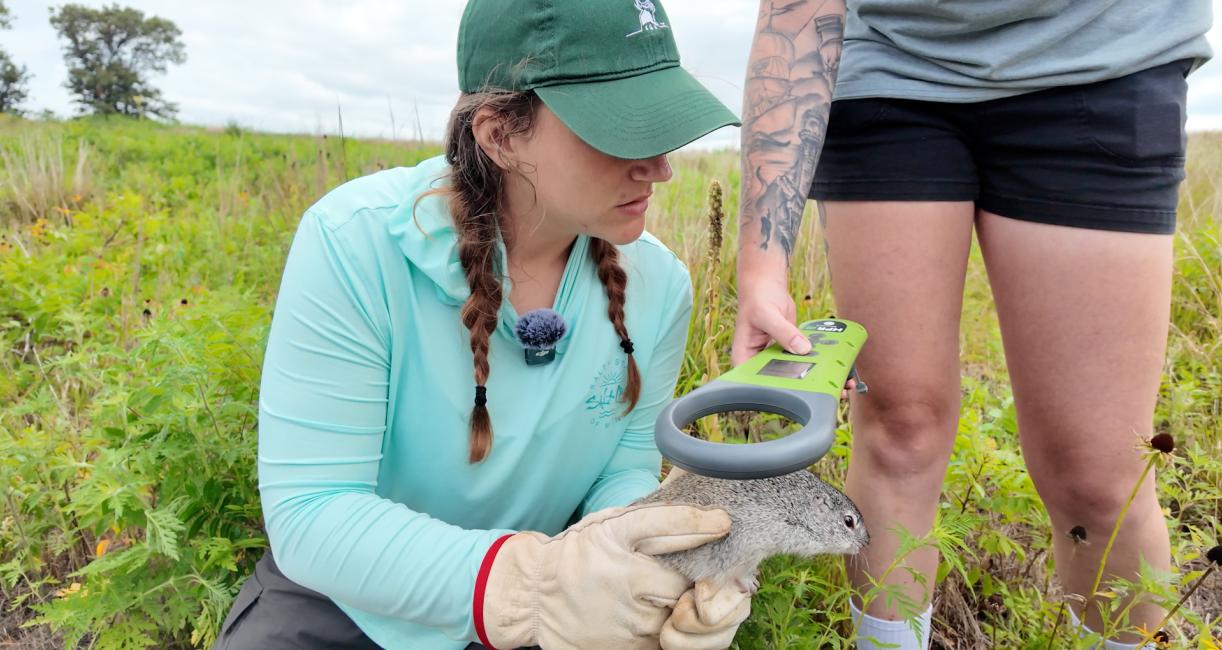
Early signs are encouraging. During this year's field season, Klopfenstein captured five squirrels that did not have pit tags, indicating they had never been previously handled or released as part of the project. Two of those untagged squirrels were adults, a finding that could suggest successful reproduction from the first groups of squirrels released at Kankakee Sands. Discoveries like these provide promising evidence that the population may be establishing itself and growing naturally in northwest Indiana.
In addition to monitoring movement patterns, Klopfenstein's thesis research explores the genetic health of the population. By collecting and analyzing genetic samples, she hopes to determine whether the squirrels are reproducing successfully, whether the population is maintaining enough genetic diversity to remain healthy over time, and how future reintroductions can strengthen the population's long-term viability.
The project also includes comparisons with Franklin's ground squirrel populations in South Dakota. Genetic samples and hair collected from squirrels in both states will help Klopfenstein evaluate overall population health and potential stress levels. Using cortisol analysis from hair samples, she hopes to learn whether squirrels at Kankakee Sands experience different levels of environmental stress than those living in more agricultural landscapes.
While the research contributes valuable information to wildlife conservation efforts, Klopfenstein credits much of her success to the support she has received at PFW and from partners involved in the project.
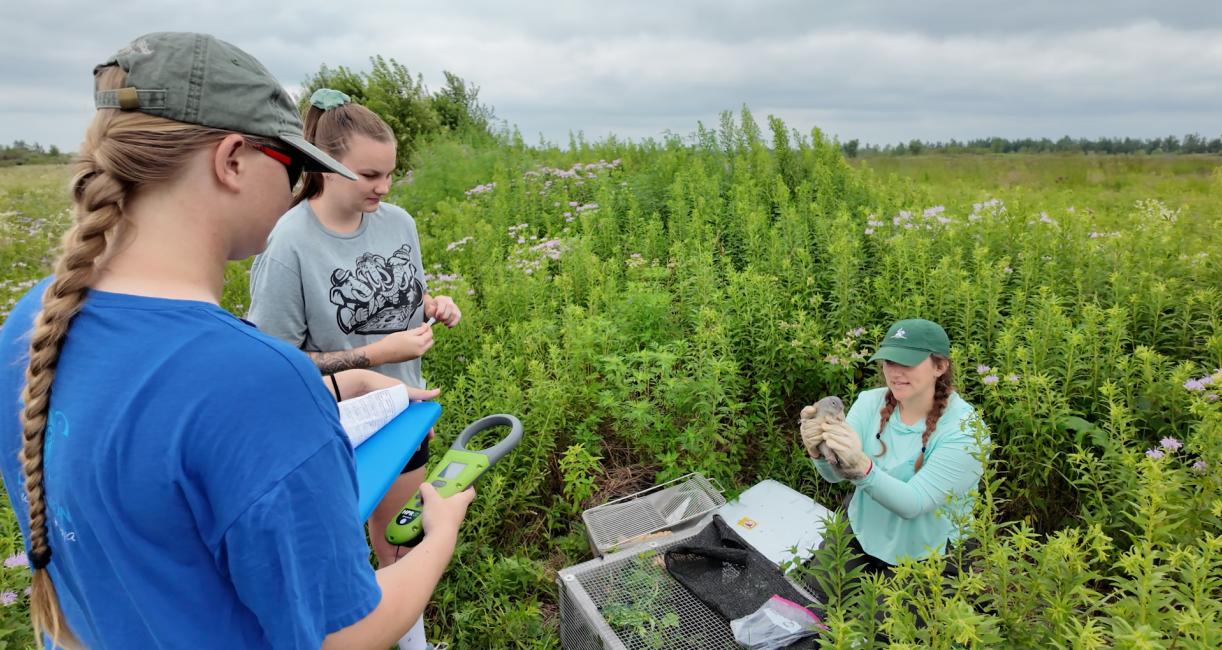
In addition to guidance from faculty members including her advisor, Dr. Scott Bergeson, along with Dr. Jordan Marshall, Dr. Mark Jordan, Dr. Bruce Kingsbury, and others throughout the Department of Biological Sciences, Klopfenstein has worked alongside undergraduate biology student volunteers from PFW and staff from The Nature Conservancy, which manages Kankakee Sands.
"Everybody just wants to help each other," Klopfenstein said. "It's a really welcoming and helpful environment."
As the squirrels settle into their new home, Klopfenstein will continue tracking their movements, analyzing genetic samples, and gathering data that could help shape future conservation efforts.
For her, every tracked movement, genetic sample, and field observation represents another piece of the puzzle in restoring a species that once thrived across Indiana's prairies.

Related Articles
Education, Engineering and Technology, Science
Girl Scouts STEM Expo sparks curiosity, confidence, and career dreams at PFW
Science
Inside the Fort Wayne Zoo: PFW Students Gain Hands-On Experience
Arts and Humanities, Education, Science
CELT Teaching Award winners announced
Science
Outside opportunity leads to massive College of Science project