college of liberal arts
research co-labs
SPRING 2027 Co-Labs
Now Accepting Student Applications
During the Spring 2027 semester, this Co-Lab will give students an opportunity to study how public opinion shapes and is shaped by contemporary social and political issues. Students will explore attitudes toward social welfare programs, health care, education, criminal justice reform, gender equity, cultural identity, and other timely topics. The course emphasizes hands-on research with major survey datasets such as the General Social Survey (GSS), American National Election Studies (ANES), and Pew Research Center, allowing students to examine how demographic factors, media narratives, historical contexts, and political institutions influence attitudes.
During the semester, students will gain skills in quantitative research, data interpretation, and policy-relevant analysis. Projects will culminate in both academic and public-facing presentations at a campus-wide event sharing findings with the community. This is a 3-credit hour course. Students will enroll in IDIS 49100: Special Topics in Interdisciplinary Studies. Depending on individual academic plans and subject to departmental approval, this course may fulfill:
• COLA Thematic Requirements (Area C): Institutions and Behavior
• Civics Literacy Proficiency Requirements
• CRIM 37000: Seminar in Criminal Justice
• Honors Program H-Option Credit
Students interested in collaborating with Dr. Aitalieva should send a 250-word statement describing their research interests, relevant coursework or skills (such as statistics, writing, or data management), and motivation for joining the project. Applications should be sent to [email protected]. Applications should be submitted by Friday, October 30, 2026 by 5:00 pm.
The project will give interested advanced COLA students an opportunity to conduct research on the topic of Russian Imperialism and its legacies, while learning to use a number of digital humanities tools. In addition to honing their research and writing skills, the project will allow students to create a public-facing final product—a virtual exhibit—that can serve as a “calling card” for future opportunities in internships, research assistantships, and employment.
Russia’s invasion of Ukraine in February 2022 shone a light on Russia’s unrepentantly imperial foreign policy and forced a lot of soul searching in Russian/Slavic/Eurasian Studies that continued to center Russia and Russian culture, history, and de-emphasize or relegate to the margins the study of the history and cultures of the colonized people. Students will learn about the multi-cultural, multi-ethnic, multi-national, multi-lingual, and multi-denominational nature of the Russian and Soviet empires and provide them with the opportunity to focus their research on a particular region or now-independent country that experienced Russian imperialism.
The course will be divided into three parts:
Part I: History of Russian and Soviet Imperialism
Students will meet to discuss readings on the history of Russian and Soviet, as well as key theoretical texts and decide which case studies and chronological time periods students want to focus on for their research projects, based on student interest. (The background knowledge of students in the class will determine how much time we devote to this part of the class.)
Part II: Digital Humanities
Students will identify relevant digital humanities tools that students would want to incorporate into their projects, e.g. Scalar, Timeline JS, Google Charts, a geospatial program. These tools will allow students to try different strategies of data visualization, e.g. creating relevant timelines accompanied by visuals, analysis of quantitative data (e.g. publications in specific languages per year; arrests and executions by the Soviet regime; etc.), and geospatial visualization to show travel and networking, deportations, uprisings, etc.
Part III: Group Research and Exhibit Design/Development
For this CO-LAB, students must have the following prerequisites:
- successful completion of HIST 21700 (for history majors) or its equivalent (ENGL 20201, HIST 21700, ILCS 30000, POL 20700 or WOST 23000 for non-history majors)
- interest in Digital Humanities
- interest and willingness to work collaboratively
- be enrolled in no more than 15 credits for Spring 2027 (including this class)
Applications or questions about this Co-Lab should be sent to [email protected]. Priority deadline for applying is Oct. 19, 2026.
What is our Co-Lab program?
The College of Liberal Arts launched its Co-Lab Program, an exciting new initiative that provides our students with an opportunity to work closely with a small cohort of their peers on a research-based project under the guidance of a faculty director.
The program is competitive, both for the faculty who design the projects and for the students who are selected to participate in the funded Co-Labs. Four COLA faculty led Co-labs include: Dr. Bassett, professor of English, Dr. Heloisa Wilkerson, assistant professor of communication, Dr. Ann Livschiz, associate professor of history, and Dr. Damian Fleming, professor of medieval studies.
Past Co-Labs.
Take a look at some of our previous co-labs, but also keep an eye out for future co-labs that might align with your educational interests.

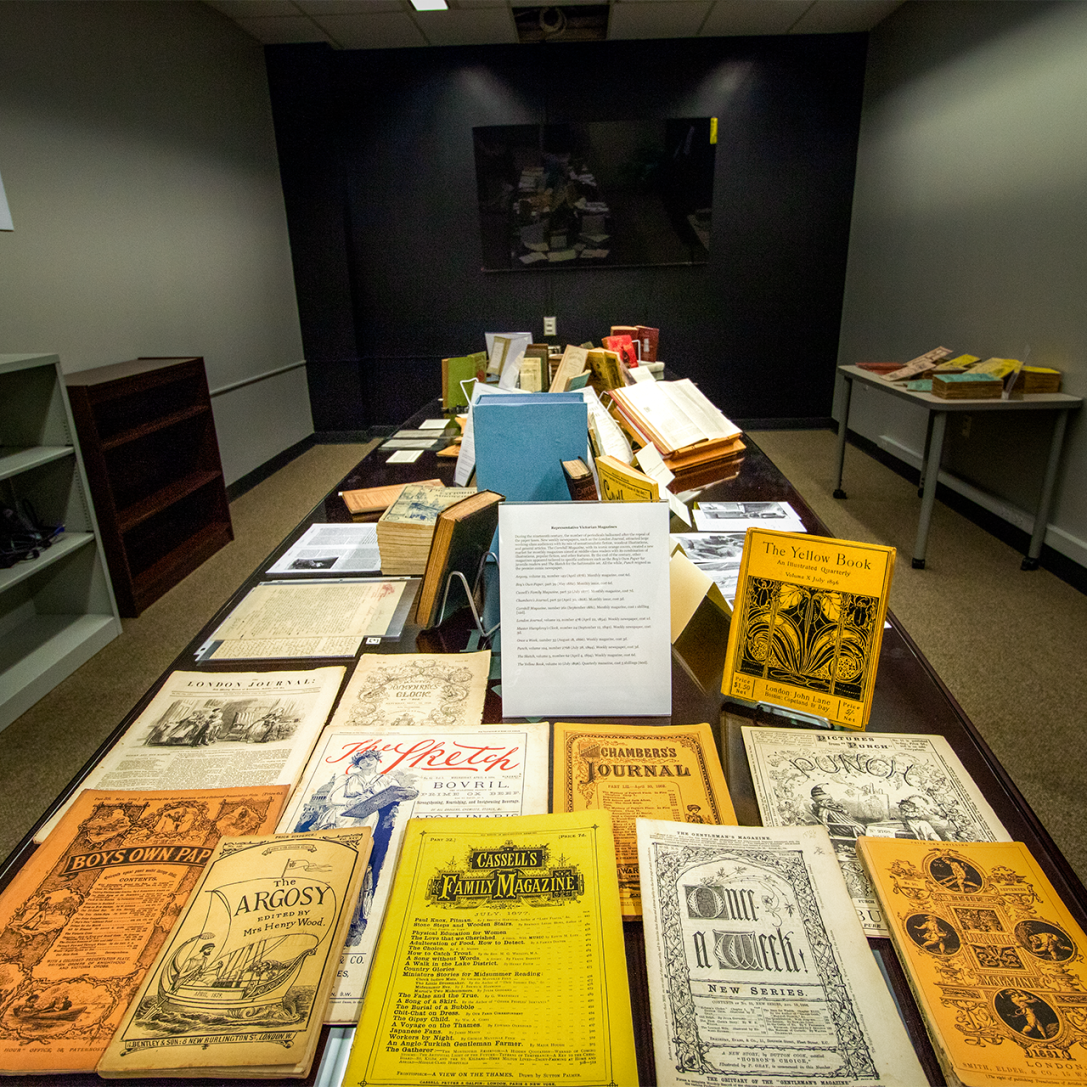
Victorian Fiction of 1880s with Dr. Bassett
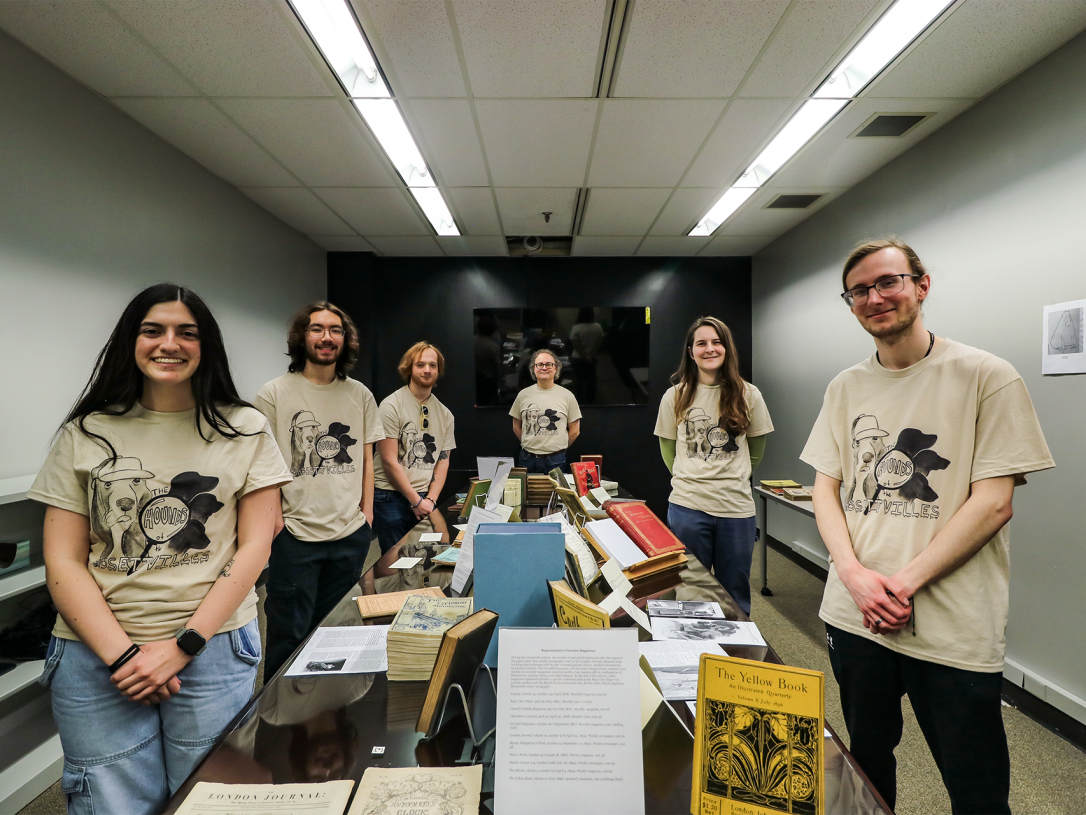
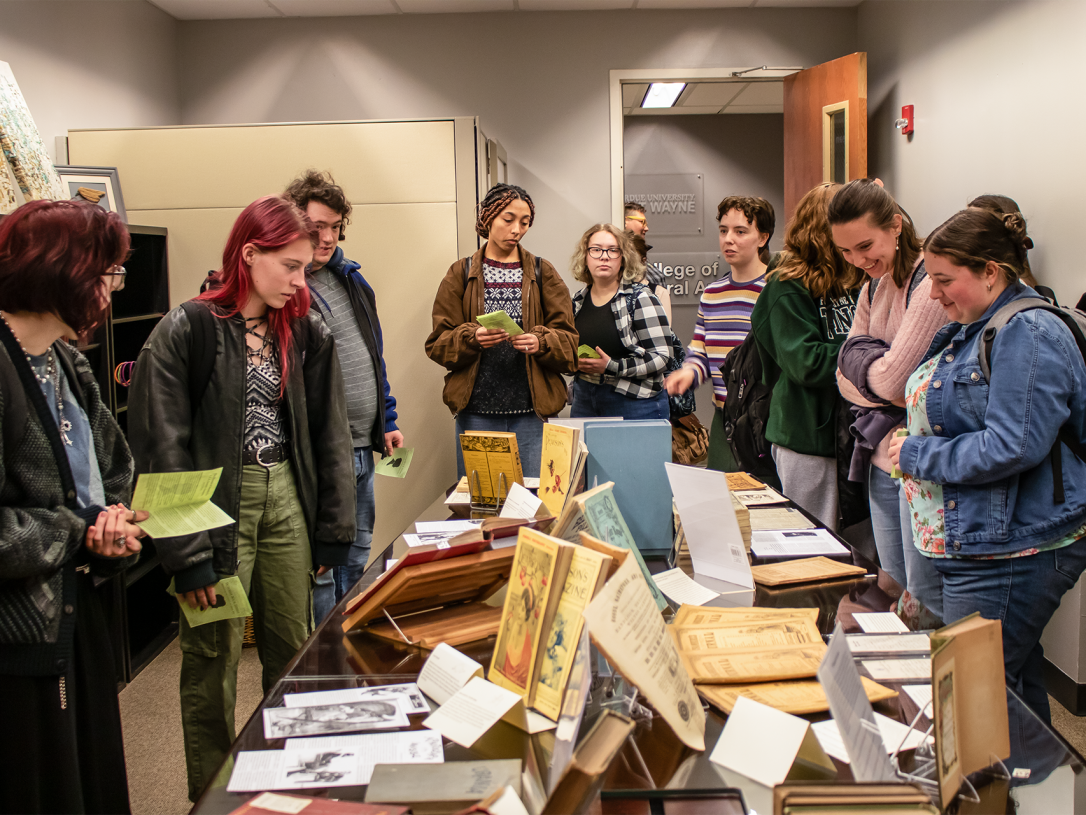
Love literature, history, or digital projects? Join this CO-LAB to uncover hidden stories in Victorian publishing. You’ll help grow the largest global database of nineteenth-century novels, work hands-on with rare books, and contribute to a resource used by researchers around the world.
Exploring the impact of social media on elections
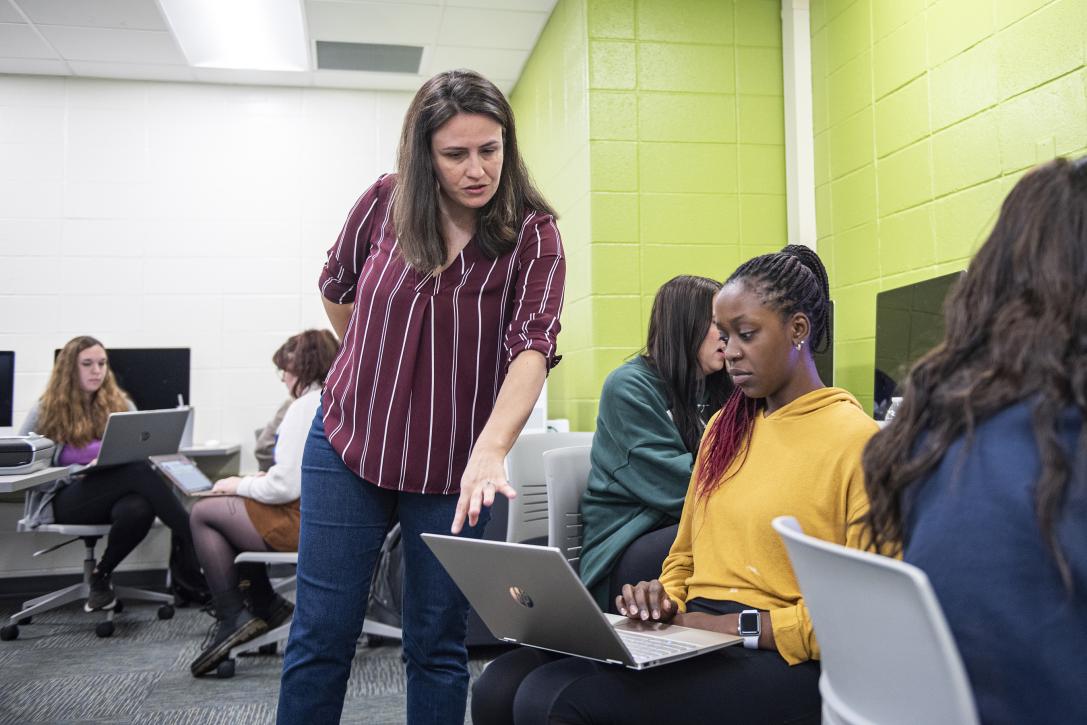
Dr. Wilkerson’s Co-Lab tackled a timely and relevant topic: the role of social media in the 2024 election.
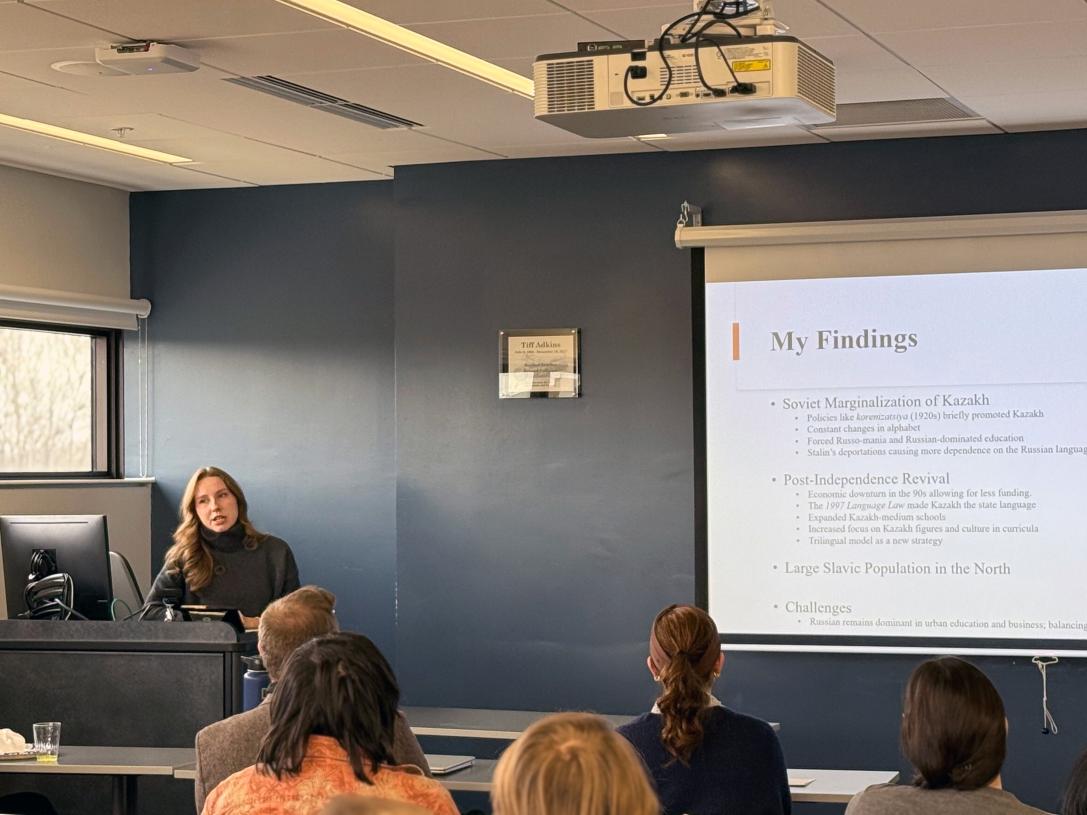
Through the project, “Social Media, Elections & You,” students analyzed how journalists frame political campaigns, how that framing influences audience engagement, and the effects of misinformation and polarization on elections. Students collaboratively conducted three original research projects using discourse analysis and interviews. A highlight of the semester was a roundtable discussion held by the students just one week before the election that was featured as a civics literacy event.
Examining Russian and Soviet Imperialism through Digital Humanities
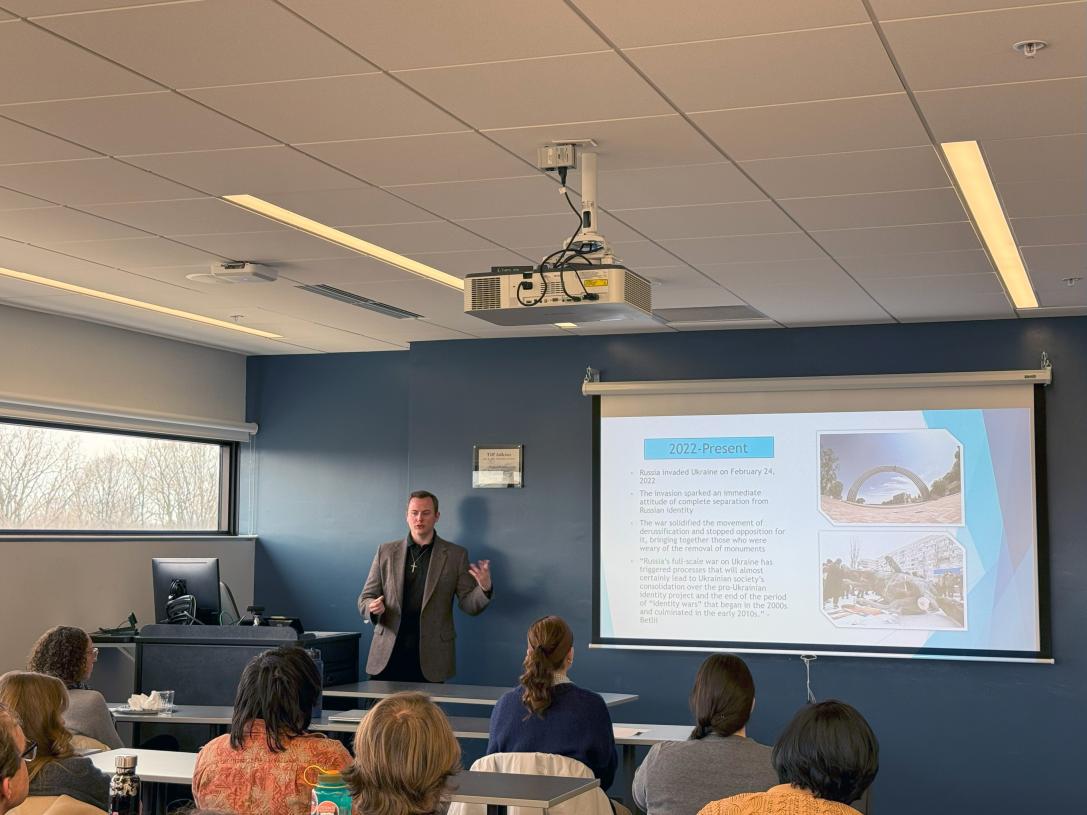
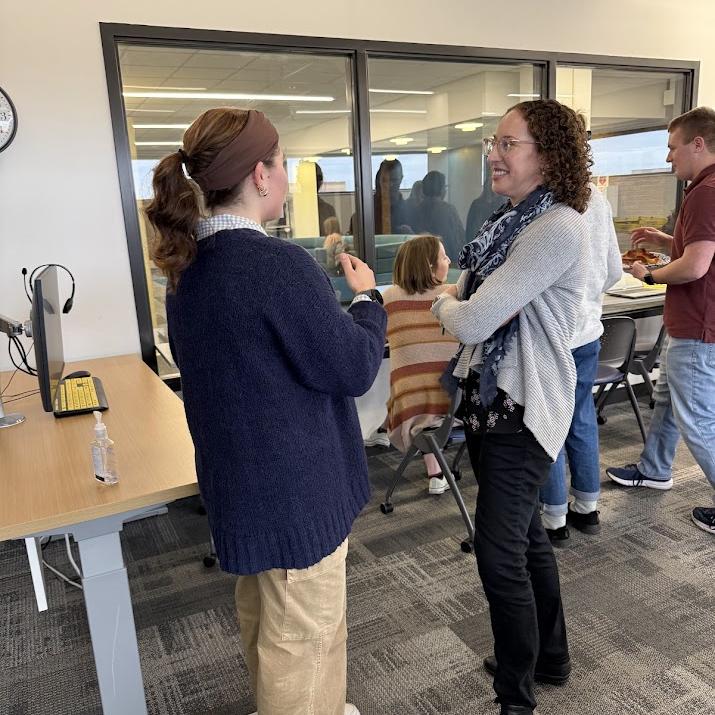
Dr. Livschiz’s Co-Lab explored Russian and Soviet imperialism and its ongoing impact. A key component of the project was the use of digital humanities tools, such as Scalar and StoryMaps, to create a digital exhibition. One featured project, “Soviet Monuments in Kyiv: Political Memory as a Weapon in Identity Politics,” showcased how political memory is shaped through historical narratives.
Students stated the overall experience helped them grasp how the digital humanities can aid in publishing valuable historical narratives to a public audience.
Investigating Medieval Manuscripts and Hebrew Alphabets
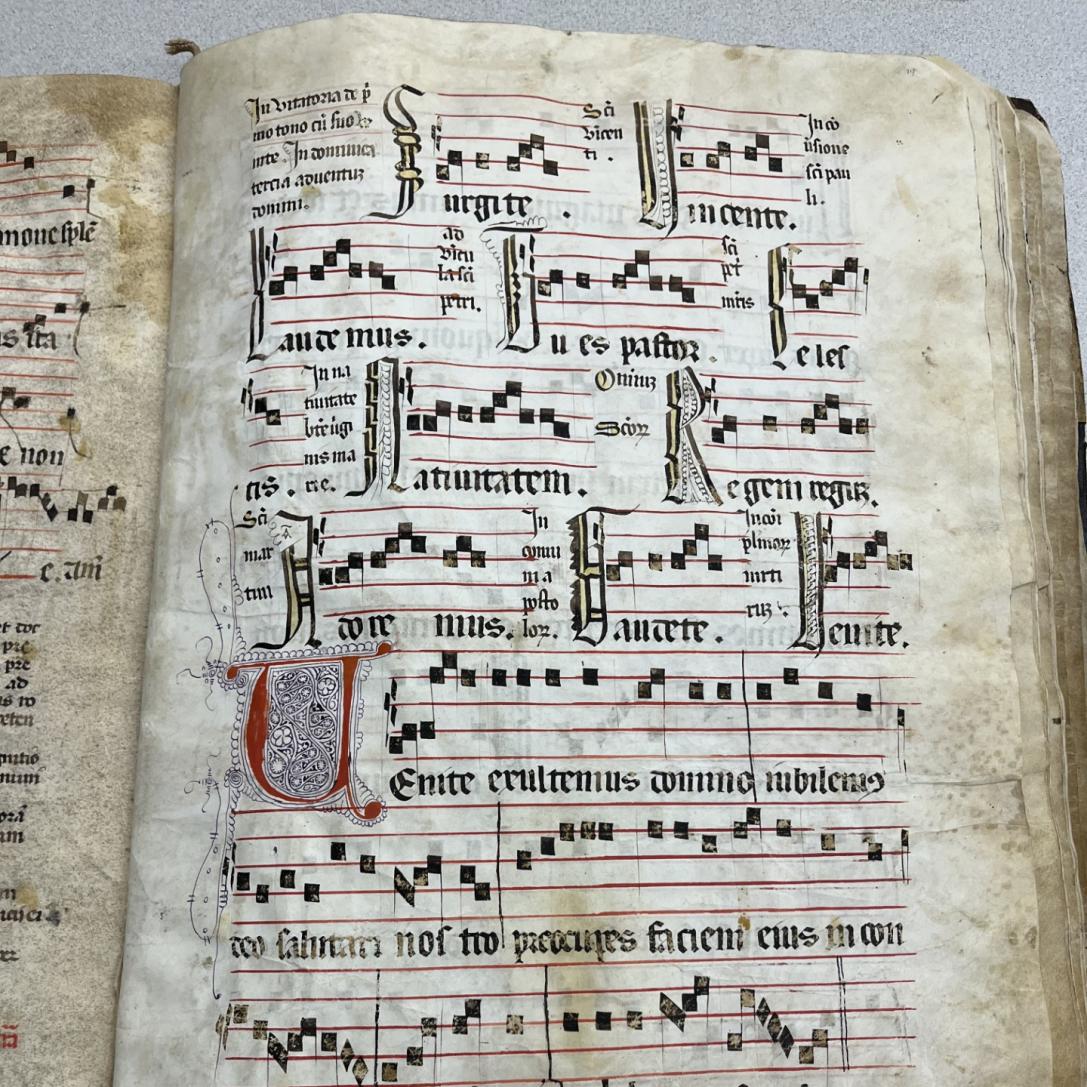
Dr. Fleming’s Co-Lab focused on his decade-long research into bad Hebrew in medieval Christian manuscripts. Contributing to the work Fleming has already undertaken, students analyzed 8th- and 9th-century manuscripts through online digitization, working to categorize alphabets by date, library, and letter forms.
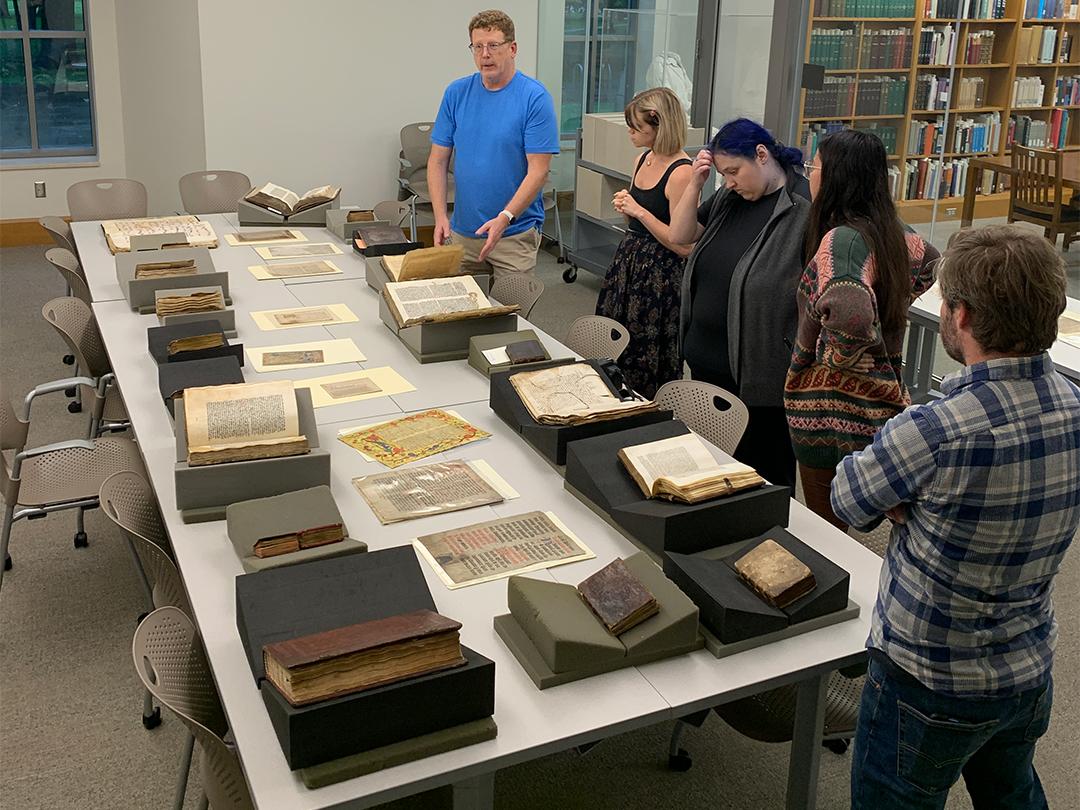
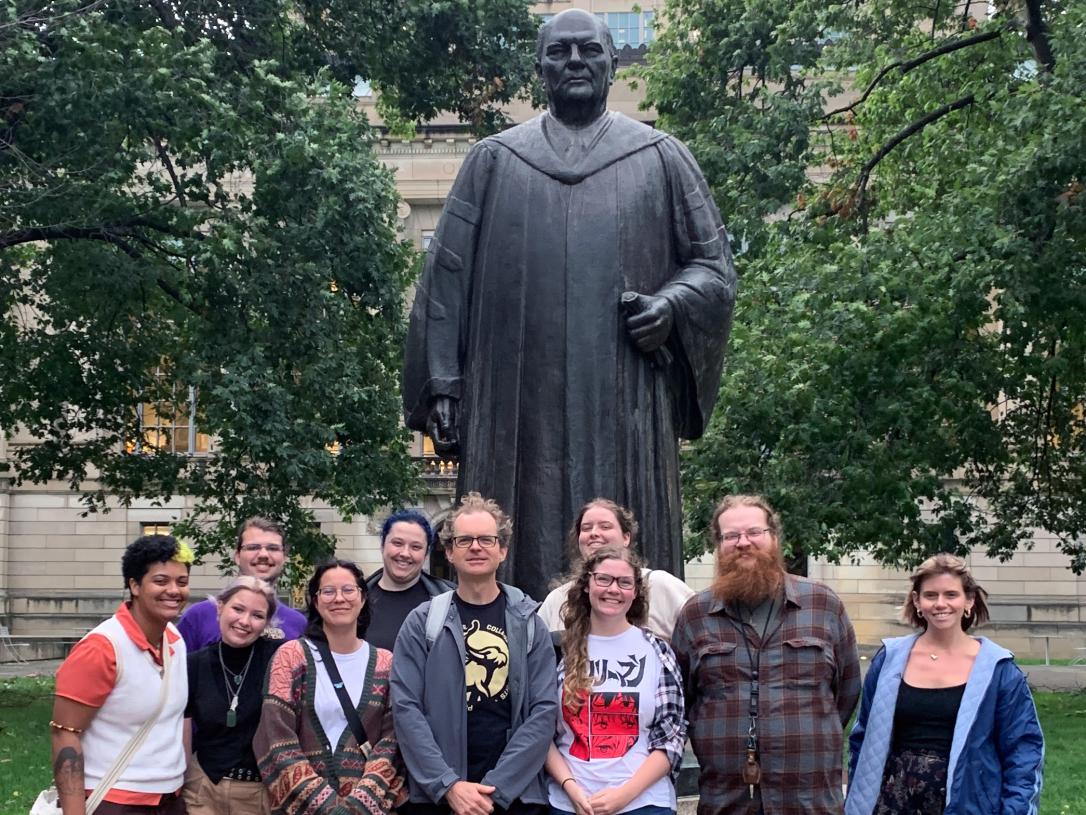
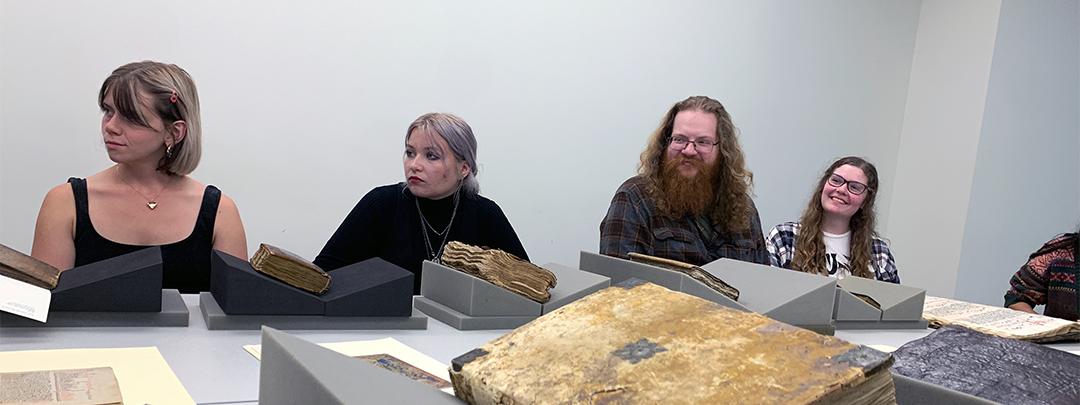
In October, Fleming’s cohort visited Ohio State University’s Rare Books and Manuscripts Library, where they had the unique opportunity to study medieval books of hours and liturgical manuscripts firsthand. After returning to Purdue University Fort Wayne, students presented their findings to the university community.